The harp, a shimmering symbol of elegance and ethereal beauty, has woven its way through the tapestry of human history, leaving a trail of enchanting melodies and captivating imagery. Its journey, spanning millennia and continents, is a testament to its enduring appeal and its ability to connect with the deepest parts of the human soul.
Echoes of Antiquity:
The harp’s roots can be traced back to the ancient civilizations of Mesopotamia and Egypt. Around 3000 BC, simple bow harps, shaped like hunting bows, were depicted in wall paintings and sculptures. These early instruments, often small and portable, were likely used in religious ceremonies and for accompanying storytelling.
As societies evolved, so did the harp. In ancient Egypt, angled harps, distinguished by their characteristic shoulder and pillar, became prominent features in royal courts and temples. These instruments were often elaborately decorated with inlaid ivory, precious stones, and intricate carvings, reflecting their high status. Similar arched harps were also found in ancient Greece and Rome, frequently associated with Apollo, the god of music and poetry, further solidifying the harp’s connection to artistry and divine inspiration.
The Medieval and Renaissance Flourishing:
The harp continued its journey through the Middle Ages and Renaissance, finding a particularly strong foothold in Celtic cultures. The Celtic harp, also known as the clàrsach in Scotland and the clairseach in Ireland, became a powerful symbol of national identity and cultural heritage. Highly skilled bards and harpers held positions of honor in Gaelic societies, composing and performing music that celebrated their history, mythology, and the beauty of their lands.
During this period, the harp also found its place in European courts and aristocratic circles. More complex designs emerged, including the addition of more strings and the development of diatonic harps, which allowed for a wider range of musical possibilities. The Renaissance saw a refinement in harp construction, with luthiers experimenting with different materials and techniques to enhance the instrument’s tone and projection.
The Pedal Harp Revolution:
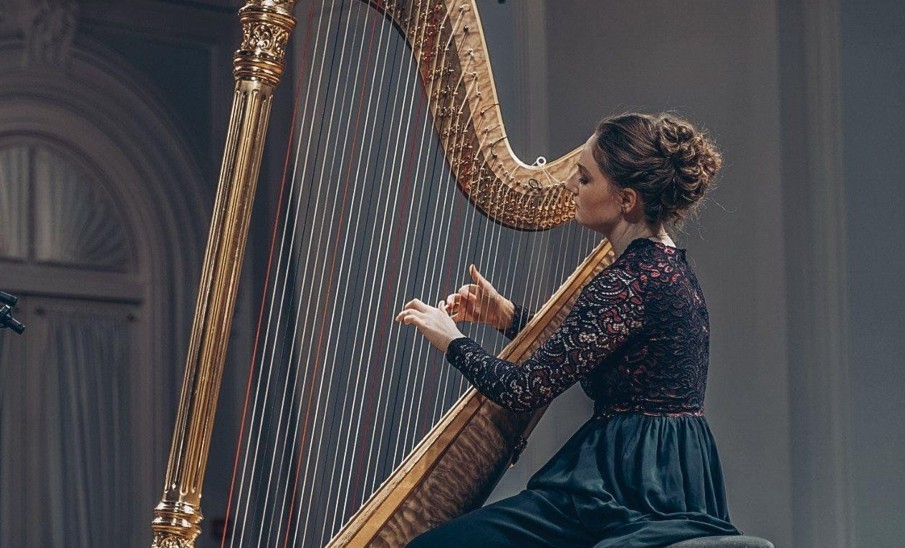
The 18th and 19th centuries witnessed a pivotal development in harp technology: the introduction of the pedal harp. This innovative design, pioneered by Sebastian Érard, allowed players to alter the pitch of the strings by manipulating pedals. This groundbreaking advancement enabled harps to play in any key and significantly expanded their repertoire, opening up new avenues for composers and musicians.
The pedal harp quickly became the standard instrument in orchestras and concert halls, its rich and versatile sound becoming a defining feature of romantic and impressionistic music. Composers such as Debussy, Ravel, and Tchaikovsky embraced the harp’s unique capabilities, writing iconic pieces that showcased its ethereal beauty and dramatic potential.
The Harp in the Modern Era:
The 20th and 21st centuries have seen the harp continue to evolve and diversify. While the pedal harp remains the mainstay of the classical music world, other types of harps have experienced a resurgence in popularity. Lever harps, also known as Celtic harps, have gained a wider audience, offering a more accessible and portable alternative for aspiring harpists.
Furthermore, the harp has ventured beyond its traditional boundaries, finding its way into genres such as jazz, folk, and even contemporary pop music. Artists like Joanna Newsom, Brandee Younger, and Mary Lattimore have pushed the boundaries of harp performance, demonstrating its versatility and its potential to create stunning and innovative soundscapes.
A Legacy of Beauty and Innovation:
From its humble beginnings as a simple bow instrument to its current status as a sophisticated and expressive instrument, the harp has captivated audiences for centuries. Its history is a testament to its enduring appeal, its ability to adapt and innovate, and its power to evoke profound emotions. As we listen to the harp’s shimmering melodies, we are reminded of its rich and complex history, a journey through time that continues to resonate with beauty and wonder. The harp’s story is far from over, and its future promises to be as captivating and enchanting as its past.